Showing posts with label earth day. Show all posts

Tuesday, April 22, 2025

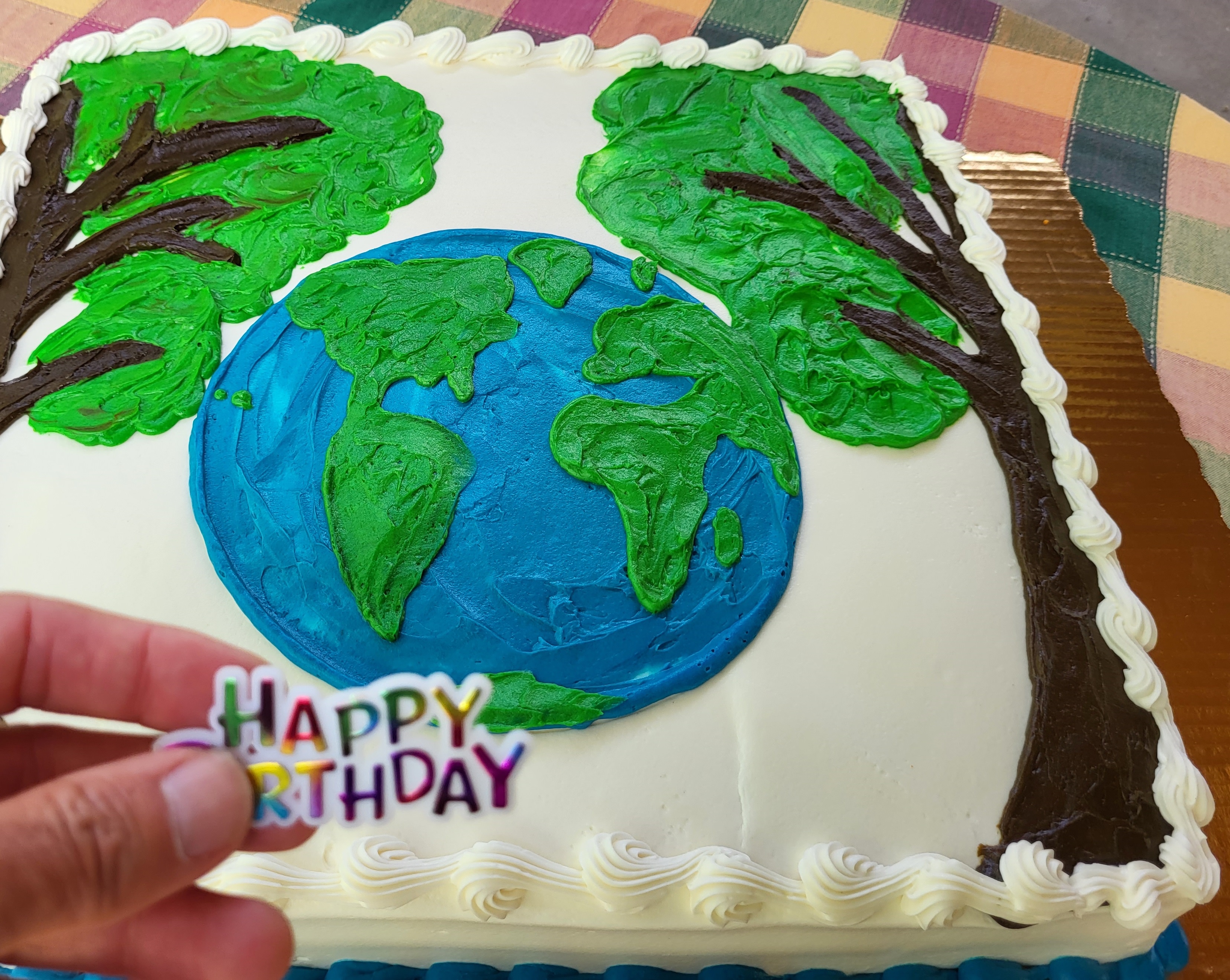
Happy Earth Day 55: Perpetual Sustainability Book

 April 22, 2025 marks the 55th Earth Day. That’s 55 years since millions first took to the streets in 1970 to demand a cleaner, more just, and more sustainable future.

But this year, we don’t just mark the day—we recommit to the journey.

From Sustainability to Regeneration

Sustainability was the starting point. But sustaining broken systems is no longer enough. We need to regenerate—our ecosystems, our communities, and our approach to progress.

That’s the heart of my new book: Perpetual Sustainability™: Leveraging Regenerative Dynamic AI (rdAI)

Monday, April 22, 2024

Earth Day: Drawdown & GAI

 What does GenAI have to say about the scientific-based solutions promoted by Project Drawdown? ProjectDrawdown.org (Another take on Earth Day using GAI.)

We employed our fav GenAIs to chat about Project Drawdown. This is the overview with the prompts. Please feel free to run GenAI chat with your own queries.

Q: Project Drawdown looks at the biggest places to make the greatest impact toward reducing human impact on the planet. What are the most impactful of these?

Q: What are the ways that someone of average income in the USA could make the most impact based on these top 10 solutions?

GenAI on Earth Day 2024: Overview

It is Earth Day, April 22.  Earth Day 54 since the first in 1970. (Earth Day Quiz below... Visit EarthDay.org or Wikipedia: Earth Day for more.)

Wow. The population was about 3.7b, now more than 8b. But as worldwide life span increases and wealth increases so does lifetime consumption.

We employed our fav GenAIs to chat about it... and to generate some graphics. This is the overview with the prompts: there are two blog posts with GenAI chats: Part 1 and Part 2. Please feel free to run GenAI chats of your own.

GenAI on Earth Day 2024: Part 1

Earth Day, April 22.  See the OVERVIEW. This is Part 1 of 2 of the discussions with GenAI ChatBots.

GenAI on Earth Day 2024: Part 1

Q: What is the theme of Earth Day 2024? … And, generate a graphic that depicts this year’s Earth Day theme.

Q: Create an Earth Day article that incorporates this year's theme and include ways that GenAI might help?

Q: If GenAI were a world leader, what would it say about Earth Day?

#EarthDay #Sustainability #RE100 #ReduceReuseRecycle #RegenerativeDynamicArticle #RefractiveThinker #SustainZine #ScenarioPlans.com #DelphiPlan.com 

You: Create an Earth Day article that incorporates this year's theme and include ways that GenAI might help?

Sunday, April 23, 2023

The BARD on Earth Day. Shakespeare in Love (with AI)

I've been soliciting the sage advise and wise words of the BARD recently... 

I got my new best buddy Bard (AI from Google) to help with two blogs: World Water Day 2023: Accelerating Change on March 22 and Earth Day 2023: Invest in our Planet on April 22. 

But, William Shakespeare would be 459 years olde today (~23 April 1564 -- 23 April 1616), so I wondered what "The Bard" would have to say? On the comings and goings of Earth Day?  The question asked:

What would Shakespeare say about Earth Day?

Sunday, April 2, 2023

Earth Day 2023: Invest in Our Planet

I got my new best buddy Bard (AI from Google) to help with two blogs: World Water Day 2023: Accelerating Change in March and Earth Day 2023: Invest in our Planet in April (this blog post).

The world's population is growing rapidly -- blasting through the 8 billion humans on the planet last year -- and the demands on the resources of Earth are likewise increasing. So, I got together (via the Internet) with my buddy Bard to see what he/she/it had to say related to a few questions I had related to Earth Day 2023.

Q: Earth Day 2023

Earth Day is an annual event celebrated on April 22 to demonstrate support for environmental protection. First held on April 22, 1970, it now includes a wide range of events coordinated globally by EARTHDAY.ORG (formerly Earth Day Network) including 1 billion people in more than 193 countries. The official theme for 2023 is Invest In Our Planet.

Thursday, April 21, 2022

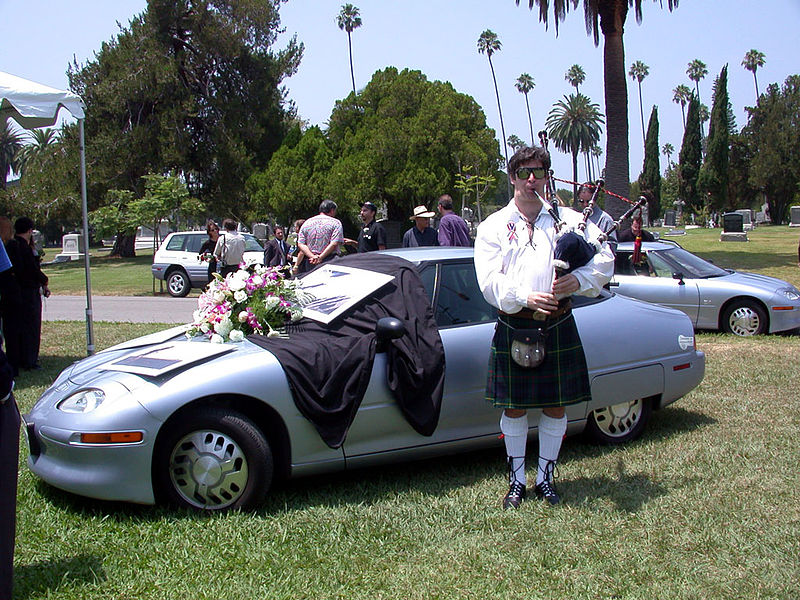
Earth Day 2022 Who Killed the Electric Car?

 Earth Day 2022 (April 22, ’22) Who Killed the Electric Car?

The statistics and the forecasts for Global Warming and Climate Change are increasingly dire. The decision – and it is a decision – to do business as usual (buy big gas guzzlers) is becoming increasingly costly to the world. And the window to avoid the worst warming scenarios is closing. The CO2 and methane that we have been pumping into the atmosphere will persist for decades (centuries really) continuing to heat a warming world.

Thursday, April 22, 2021

Earth Day 2021 Quiz

Earth Day 2021 Quiz (April 22, 2021)

    Test your knowledge of a few Earth related topics on Earth Day. Note that when you Google some of these topics, you can get rather wide ranges of answers. Make sure you are looking at the US (if that is the target region), rather current information, and rather reliable sources. Or, just wait a day to see what we think the correct answer should be. 

Answers will be forthcoming today or tomorrow.

1.  Plastics. Approximately what % of the US’s plastic gets recycled?

a.  8-10%

b.  14-15%

c.  25-30%

d.  45-50%

2.  Plastics. Approximately what % of the US’s plastic makes its way into lakes, rivers, oceans?

a.  0.5%

b.  1%

c.  3%

d.  5%

3.  Plastic in the environment (on land or in ocean). About how many years does it take to decompose a plastic bottle in the ocean?

a.  Plastic decomposes in about 20 years.

b.  Plastic decomposes in about 50 years.

c.  Plastic decomposes in about 150 years.

d.  Plastic doesn’t really decompose, but let’s go with 450 years.

4.  Plastic in the oceans. Approximately how many years before the plastic in the oceans will exceed the fish? (by weight). 

a.  Too last, plastic already exceeds fish in oceans (by weight).

b.  2030. In 10 years, plastic should exceed fish (by weight).

c.  2050. In 30 years, plastic should exceed fish (by weight).

d.  2100. In 80 years, plastic should exceed fish (by weight).

5.  Manatees in Florida are dying at an unusually high rate recently. What is the primary cause of deaths in 2021?

a.  Boats

b.  Cold

c.  Disease

d.  Starvation

6.  The artic is melting enough that ships can now travel through the Arctic to the North during the summer and avoid the Panama Canal or longer routes? Approximately how long during the summer can ships now navigate through the Arctic?

a) About 4 weeks of thaw sufficient to navigate in the summer.

b) About 8 weeks of thaw sufficient to navigate in the summer.

c)  About 3 months of thaw sufficient to navigate in the summer.

d)  About 365 days a year.

7.  About, what percentage of the US lakes, rivers and streams are polluted (according to US EPA)?  (Polluted, as in no swimming and you should not eat the fish, if there are any.)

a.  4%-5%

b.  10%-15%

c.  25%-30%

d.  40%-45%

8.  Soil. The current “industrial” farming methods deplete the topsoil. No topsoil, little or no farm crops. At the current rate of topsoil depletion, how many years do we have before we “run out” of topsoil? [Ooops.... Things changed... problems with this question... Well, with the answers...]

a.  About 20 years until the world’s topsoil will be effectively depleted.

b.  About 30 years until the world’s topsoil will be effectively depleted.

c.  About 60 years until the world’s topsoil will be effectively depleted.

d.  About 100 years until the world’s topsoil will be effectively depleted.

9.  Extinction. Out of about 8 million plant and animal species on earth, approximately how many are in threat of extinction?

a.  100K, 1.2%

b.  300K, 3.7%

c.  500K, 6.2%

d.  1M, 12.5%

10.  Earths. Current estimates are that we significantly overuse the earth’s resources (overshoot the earth’s carrying capacity). We currently need part of another earth to be “sustainable”. But, if the rest of the world consumed at the same rate per person as we do in the US, how many earths do we need?

a.  2 earths (+1)

b.  3 earths (+2)

c.  4 earths (+3)

d.  5 earths (+4)

11.  What is the depth of the oceans? (Plus, water expands when warmed about 0.000214 per +1C for seawater, so how much would sea levels rise based on a +1 degree Centigrade increase in global temperature that transferred throughout the oceans.)

a.  Average ocean depth is 1,000ft (+1C temp increase = +2.6in increase in avg ocean level.)

b.  Average ocean depth is 2,500ft (+1C temp increase = +6.4in increase in avg ocean level.)

c.  Average ocean depth is 1.2 mile (+1C temp increase = +16.3in in increase avg ocean level.)

d.  Average ocean depth is 2.3 miles (+1C temp increase = +31.2in increase in avg ocean level.) 


Wednesday, April 22, 2020

Earth Day 2020, 50 years of Hind sight

It is the 50th Earth Day and the world is generally locked down while we deal with the Coronavirus pandemic -- and how best to ramp back up the world economy.
50th Earth Day. April 22 2020
The pandemic is a serious and sobering aspect to the fun and excitement to an otherwise interesting and informative day of rallies, speeches waterway cleanups and more...

Worldwide we are going on 3M positive COVID19 cases and nearing 200,000 deaths. The US, never to be outdone in anything that seems competitive, has 32% of the cases and more than 25% of the deaths. Deaths in New York and New Jersey just passed 15,000 and 5,000 respectively. New England deaths exceed all other countries. It is hard to imagine this given that the virus had to cross the Pacific (to the west coast) or travel to Europe and then cross the pond to New England. The US has only 4.2% of the world's population, yet 25% of the worlds deaths, and rising. How can that be?

COVID19 Positive Cases and Deaths
           As of April 22, 2020
       Cases  %/World
World 2,621,436 100.0%
 deaths 182,989 7.0%
7.0%   %/World
US 837,719 32.0%
 deaths 46,771 25.6%
Deaths% 5.6%

COVID has had a big toll on health and live and a wicked toll on the world's economies. There some linings, and some of them silver, from this pandemic – currently and on the other side of it. Let’s think of a couple while we address what the other side of COVID might look like. First, if you think that we will ever get back to “normal”, you probably haven’t thought it through a lot.
Pollution. The massive slowdown in the world economy has allowed the earth to take a breather. There are wonderful satellite views of China, Europe and the US, before and after pictures. Business as usual shows clouds of pollution followed by a few weeks of complete economic shutdown, and pristine-looking skies. Wow! There are similar pictures everywhere. Denver. LA, New York. The clear canals of Venice with fish and dolphin. 

Pollution contributes to hundreds of millions of ailments every year, and to millions and millions of deaths. Let's say 6 to 10 million people die each year because of air pollution. (See for example, this Forbes article in 2018.) Note that the infographic shows about 2.1M in the USA. Maybe the slowdown in the first quarter of 2020 will result in 1M people saved related to air pollution? 
Once people get a taste of clean air, they tend not to want to return to smog and pollution.
A Whole New Economy. The world economy will never be the same. For several reasons. First, what we came to think of as "normal" was never normal. We have undertaken to consume all the world's fossil fuels in a few short centuries. We are fully beginning to realize the full costs of non-sustainable systems, the business-as-usual economy was never normal.
Earth Overshoot day is a concept that is especially relevant to the first Earth Day in 1970. The resources we took and consumed from the earth -- although maybe not sustainable and renewable -- were fully supplied by the 1 planet we inhabit. That is, the 3.7B world population in 1970, staying with the same consumption patters, could live on the earth without depleting her resources. Think of this earth carrying capacity like you do a annual budget, it would be nice if the annual income lasted all year. But the population has more than doubled to 7.7B, and overall consumption has nearly doubled. Right now, the carrying capacity of Earth is exhausted about the end of July, only 57% of the way through the year! That's 43% deficit spending for the rest of the year. To consume 43% more than the earth's annual carrying capacity, we deplete resources like trees, fish and more.
But, in 2020, the earth has gotten a bit of a breather. Overshoot day will improve dramatically!
The economy will change. There will never be a "new normal". People have gotten a taste of teleworking. It's going to be hard to force people back into the offices that require an hour commute each way. Travel will take some time to come back, and business travel will never be the same. Stadium events will take some time to come back. Students have fully embraced online learning, and they will never fully go back.
Consumption of fossil fuels are down at least 30% during the closed economy, but consumption may only bounce back half when the economy slowly starts to churn back.
This might be the jump start that we all needed to step up a move toward sustainability. Assuming a 15% jump back, we would need to reduce our carbon footprint by 3% each and every year to have a 40% (overall) reduction by 2030, a 66% reduction by 2040, and near zero by 2050. Good news, we can easily move to 100% renewables by that time. (See Stanford Roadmap to 100% Renewable Energy by 2050 by country and also by major city.) And we can profitably move to 100% renewables if we include the health and death costs of fossil fuels.
Hind sight is 2020. Every year since the turn of century as been in the hottest 20 some years, with many years breaking all time records. In fact, many months have hit monthly record highs, especially since 2015 (an El Nino year). January 2020 was hottest on record, and the oceans have never been hotter. Remember that carbon dioxide (CO2) persists in the environment for about 100 years from the time we introduce it by burning fossil fuels. As CO2 zooms from about 320ppm a hundred years ago to 415ppm now, the green house gasses will result in atmospheric heating for a century!
Our linear economy was never "normal", for this reason, and many others no one should consider using the term "new normal" on the other side of the COVID recession. Hopefully, with 2020, we will have a new respect for science and scientists.
Let's leverage this tragedy of COVID to make a real difference in our trajectory of the future.
May every day be an Earth Day.


Friday, April 4, 2014

13 of 14 warmest years on record occurred in 21st century – UN | Environment

13 of 14 warmest years on record occurred in 21st century – UN | Environment | theguardian.com:

Ouch. As you look at the clock, you will see that we are only 14 years into the 21st Century. Yet we have 13 of the hottest 14 years in recorded history.

You do have to take the whole of the earth into account, obviously, not just the USA, where we were ?fortunate? enough to have a exceptionally cold and blizzardy Winter. (Polar Vortex is now in our daily vernacular.)

If you are interested in the science go here to look at the 11 or 12 major indicators (based on several data sources each) that would indicate global warming. http://en.wikipedia.org/wiki/Instrumental_temperature_record

If you want a composite graphic that shows the robustness of the evidence, go here. There are several data sources overlaid in each graphic. Note that the stratosphere is decreasing (cooler), that is consistent with a depletion of the ozone layer.

The recent UN report talks about the trends in costs associated with climate effects, like typhoons. A draft report talks about $1.45T costs associated with climate change over the next decade. (See here http://www.livescience.com/43891-global-warming-economic-damage.html.)

The costs are expected to reach $70 to $100B per year for adaptation by 2050. (See here: http://www.usnews.com/opinion/articles/2014/03/31/will-the-uns-new-report-shift-the-global-warming-debate)

NASA has lots of interesting graphics, including time-series that will show the world temperature changes over the last couple hundred years. (Or just recently if you want since 1970).(The science visualization study at NASA is awesome, no mater what your interests: http://svs.gsfc.nasa.gov/Gallery/index.html or if you want to draw your own graphs based on the underlying data, go here: https://www.ncdc.noaa.gov/cag/time-series/global/globe/land_ocean/3/2/1880-2014).

As we come up on Earth Day (EarthDay.org or EarthDay in Wikipedia) the impacts of business as usual (BAS) really revolves around whether you think something should be done to be much more sustainable NOW!, in decades or in centuries to come.

The degree of urgency really depends on how much you believe in global warming, and how fast you think that warming may take place.

Look at the graphs and make your own call on this.

'via Blog this'

Saturday, March 22, 2014

World Water Day 2014 -- March 22

Welcome to the World Water Day of 2014: This year’s theme is Water & Energy.
By the Way: Earth Day is coming in a month, April 22!!!
Look for Seminar information.
See the 2011 SustainZine post related to World Water Day. Some info is borrowed here.
World Water Day
The 44th World Water Day (March 22, 2014): http://www.unwater.org/worldwaterday/
  World Water Day can easily flooded past us without most of us hearing a drop about it.!:-(  And why is that, you may be wondering? Or not… The problem with this, and most things sustainability related, is where to start.  And how do we put the critical sustainability issue of water onto our daily radar screen.

Water, Water, Everywhere…
  Water, so critical to life can be devastating in its absence. It can be devastating in abundance. Australia, plagued with decades of drought, finally got rain in 2011: it had an area flooded the size of Germany and France combined!  This was followed in February with Cyclone Yasi in the northeast. (A cyclone is the Pacific version of a hurricane… and, yes, they went through the alphabet to get to Y.) We know a lot about hurricanes for two years starting in 2004 giving us in Florida 3 or 4 per year including Katrina that also hit New Orleans.
  Then in the Winter of 2013-2014 we got snow, and more snow (let’s call that a polar vortex). In the meantime Europe (England) got drowned in rain.
But the quiet pain associated with water is very easily preventable with very little money. More than 1 billion of our world’s 6.9B population have inadequate drinking water with an additional 1B having inadequate sanitation. The result is that more than 3.5 million people die each year because of easily preventable water-related diseases (World Health Organization at www.WHO.int).  Approximately half of the world’s hospital beds are taken by water and hygiene-related diseases (http://water.org/learn-about-the-water-crisis/facts/).  [This should be updated, it has improved since 2011.]

The Nexus of Energy with Water, Paper, Plastic and Transportation.
  Few people realize how much water it takes to produce energy. How much water to power a light bulb, for example? To power a 60 watt bulb 12 hours per day for a year? How about 3,000 to 6,000, depending on the power source, it could be more or less. See here.
  The water doesn't go away, per se. Water might be taken in upstream, used to produce steam and power turbines and then released downstream.  Give a look at the Nexus sections in the outline on the last page of Climate Changes and Sustainability, a WikiBook: http://tinyurl.com/SustainYBook

Power and the Nexus of Energy, Water, Paper, Plastic, etc. are discussed in Wikipdedia:

World Water Day
  World Water Day was initiated to try to solve health and wellness problems around the world where people have poor water and sanitation. The UN has a 10 year program to attempt to overcome the pain and death associated with inadequate water by 2015. Progress has been made, but it is slow.
WATER STATS: Most of the earth’s surface (70%+) is water. Yet only about 2.5% is freshwater. (The salt in oceans and some lakes make it unusable for drinking, agriculture, etc. without expensive desalinization processing.) Of the world’s freshwater 68.7% is in ice caps and glaciers, 30.1% is underground, ~1% is other, and barely 0.3% is fresh surface water! That’s about 0.009% of our total is fresh surface water. Freshwater is lakes (87%), swamps (11%) and rivers (2%). So as we divert and consume the fresh water available to us – taking from rivers and aquifers – the impacts become ever greater as rivers dry and ancient aquifers are depleted.
This year the theme is Water & Energy. Most people don’t realize the Nexus of Water and Energy.

The Water Bubble and Water Wars
  The water bubble may be coming faster than we originally thought... Water sources, especially the invisible underwater aquifers are being depleted.  This will show in increased prices for water, water shortages and food shortages/prices (Marks, 2009). “We're fast draining the fresh water resources our farms rely on, warns Lester Brown, president of the Earth Policy Institute” (George, 2011). Our own Ogallala Aquifer in the high plans of the US (underground aquifer from Texas through Wyoming) will be depleted in about 25 years. (See http://en.wikipedia.org/wiki/Ogallala_Aquifer.).

  Water wars and water conflicts are expected to increase dramatically. Counties (and states) that are at the headwaters of rivers can take all the water and leave nothing for the cities, farmers and fishermen below. 
  Worst case, and a horrible example, is the Aral Sea. What used to be the world’s 4th largest lake is now mostly dry, highly salty and toxically polluted. Russia has been consuming the water that would have run downstream (and through) the former USSR state of Kazakhstan. (See http://en.wikipedia.org/wiki/Aral_Sea and the following news video: http://www.youtube.com/watch?v=e8b0svfuO_k at Russia Today.)
  The truth of the matter is... that water matters!  …
  Even in Florida where we are surrounded by H2O.

What can we do?
  Basically, we need to become more informed about the sustainability impact of all we say and do. We need to become more informed consumers of water. Maybe compute our water footprint. Please fill out the H2O Footprint calculator. We need to start conserving more water, more energy and more resource. (Recycling actually saves huge amounts of energy and water.)
 1)      Compute your water footprint (and take actions to reduce it):
a.       H2O Footprint: http://www.h2oconserve.org (Water footprint calculator.)
c.       Water footprint of food, products, etc.: http://www.waterfootprint.org

2)      The average American uses 2,000 gallons per day, more than twice the global average when all things are considered. (Most of the statistics will show only about 1,000 gpd, but they don’t include food, energy, etc.)
3)      For Florida-centric details & water-saving tips, please visit: www.WaterMatters.org and www.savewaterfl.com.
4)      References and links below.
Look for information about Earth Day 2014 coming up on Tuesday April 22.

Thanks for listening, reading, and thinking about sustainability.

Let’s be good stewards of our God-given resources: water and more.

Some References
George, L. (2011, Feb. 2) Earth economist: The food bubble is about to burst . New Scientist. Retrieved from:  http://www.newscientist.com/article/mg20927986.400-earth-economist-the-food-bubble-is-about-to-burst.html
Marks, S. J. (2009). Aqua shock: The water crisis in America. NY, NY: Bloomberg Press.
Some Links:
·         Official site: http://www.unwater.org/worldwaterday/
·         http://www.UNWater.org
·         http://www.Water.org
·         http://worldwater.org/


Monday, April 22, 2013

EarthDay2013: Reflections on Sustainability: Earth Day, April 22, 2013

Reflections on Sustainability: Earth Day, April 22, 2013 (www.EarthDay.org) … (or International Mother Earth Day)

Earth Day 2013: The Face of Climate Change


It’s not so much that people don’t care. . .

Being green, and being sustainable, is something that we all would happily do, if it wasn’t inconvenient to do so. And if it was easy to do. And if we knew the best place to start. And if it wasn’t too complicated to do so, we would all be more sustainable.

That’s a bit of a problem because there is no sense of urgency. There is, however, a sense of urgency about getting the economy going stronger and getting more people back to work. But reducing pollution and improving our water footprint and addressing our carbon footprint, not so much so.

This is something like saving for retirement. There’s no urgency to save for retirement until age 65, but it’s a whole lot easier if you started 35 years earlier. $:-)  We need to get the magic of compounding working for us, not against.

There is no question that we all have to get sustainable, sooner or later.  “Achieving sustainability will enable the Earth to continue supporting human life as we know it” (Sustainability, 2013, Blue Marble caption). That’s the definition of “sustainable”, something that can be done indefinitely and that does not have external costs or place a burden on future generations.

The American Planning Association’s four sustainability objectives are to use planning approaches that:
1. Reduce dependence upon fossil fuels, underground metals, and minerals
2. Reduce dependence upon synthetic chemicals and other unnatural substances
3. Reduce encroachment upon nature
4. Meet human needs fairly & efficiently (James & Lahti, 2003).

We all have to get started. Sustainable starts at home, at church, in business, in government and at school.

We need to take better care of God green earth. Stewardship is a responsibility, not a luxury.

See these topics below:
I. Global Warming/Climate Change
II. What BIG Feet you Have! … The Human Footprint
III.  Sustainable Solutions
IV. Global Acts of Green on Earth Day 2012
V. Become More Informed

Safety & Recycling. Carefully and correctly dispose of stuff like electronics, paints, oil, florescent light bulbs. Visit www.Earth911.com to see how to recycle stuff, and extremely local details of recycling centers. Eventually everything will be recycled; until then, let’s try to work it out together.

This is the 43rd Earth Day event since it started in 1970. And still we have yet to take significant measures to protect the earth we all so clearly need for survival. We all need to become more informed, as a great place to start. See the book outlined below, created from the best information anywhere about sustainability issues, Wikipedia. (Free book, no advertising in it.)

Sustainability is a journey that is started by us today, but continued by future generations.
"The earth is the Lord's, and everything in it, the world, and all who live in it." (
Psalm 24:1)

God bless,
----------------------------
Elmer Hall
Strategic Business Planning Company
Planning for Sustainable Success™
954.704.9100    www.SBPlan.com    www.SustainZine.com (blog)
P Before printing this e-mail think if it is necessary.   Think Green!


I.  Global Warming & Climate Change. The statistics for climate change and global warming seem to only be getting worse, with all continents experiencing extreme weather of hot-cold, wet-dry, often in the same year. We have the hottest decade in modern history (based on land, water and air measures). April 2012 was the 5th hottest April on record, April 2010 was the hottest (CO2Now, 2012). Glacial ice is melting, and melting at an accelerating rate. There’s evidence the ice in Antarctica, which should be expanding, is shrinking, and it appears to be melting from the inside out!

What about Greenhouse Gasses (GHGs) that trap sunlight in the atmosphere and cause warming, just like a greenhouse in winter? By burning fossil fuels we are pumping gigatons of GHGs such as Carbon Dioxide (CO2)  and Methane (CH4) into the atmosphere, GHGs above and beyond what the earth systems were used to processing prior to industrialization starting more than a century ago. And carbon dioxide persists in the atmosphere for some 100 years. Many scientist had high hopes of reversing the steady climb of CO2 in the atmosphere and bringing it back down to 350 parts per million (ppm) that we blasted through in 1985. The hope was that the US, slowed by a sluggish economy, combined with a switch to cleaner natural gas would help to lower the CO2 buildup in the atmosphere. Nope. China and India with their coal-power craze, more than wiped out any slowing from the US and Euro-zone. As measured by the Mauna Loa Observatory in Hawaii we just blasted through 397 on our way to 400 ppm. (See CO2Now.org).


This chart, and what it represents, scares the bejeebers out of me!!!!!  I don’t know about you?

In the 1990s, the IPCC came up with many projections from the best case where countries was very proactive and reduced greenhouse gases to the worst case with business as usual (BAU). The estimates then showed an increase in temperatures of 2 to 6 degrees centigrade by the end of the century. Since water expands as it warms in addition to glacial melting, this atmosphere increase would eventually result in about a 3 to 10 foot rise in sea levels. That would be devastating to coastline areas. Maybe half of the Florida Keys would be underwater, for example.  Right now, about half of the greenhouse gasses are produced by China and the USA, with the US pretty much going as BAU and China totally out of control. China now burns half of the world’s coal and adds another new coal power plant each week. In short, the problem is real, it is big, and it is getting worse. Not only that, but it is getting worse at an increasing rate.

With all that gloom and doom, what are sustainable solutions?

II. What BIG Feet You Have! … The Human Footprint
A picture is worth 1,000 words, a video must be worth millions. We humans have been having a gigantic impact on our environment. How big, you might ask? Really BIG.  A couple of the best visual representations of this are the Human Footprint series by National Geographic, which follows two humans from birth to death, as well as, The Story of Stuff and The Story of Bottled Water (Leonard, 2010a, 2010b).  There are a couple things I don’t think to be totally accurate, but you be the judge.
·         The Human Footprint, by National Geographic Special. Several 10 minute episodes. http://channel.nationalgeographic.com/channel/videos/human-footprint/ (10 minute segments; 87 minutes total, easy to find on YouTube as well). Note that it is a couple years old. They say 6+B population, but it is now >7B. Watch #1 and #8.
·         The Story of Stuff (www.StoryOfStuff.com, ~18min)
·         The Story of Bottled Water (http://www.storyofstuff.org/movies-all/story-of-bottled-water/). 

III.  Sustainable Solutions. We all – everyone, everywhere – have to start being more sustainable. Well, dah! But that is easier said than done. We have our entire life and economy and culture built around non-sustainable practices.

To start, it is relatively easy, and profitable, to cut back on 25%-30% of utilities. Start with an energy audit from your friendly local power company.

Smarter transportation will save huge amounts. Telecommuting saves $30,000 to $50,000 per full-time equivalent employee, with more than $20,000 savings to the employer. Yes, you might want to read that sentence again. The actual savings seem to be, all things considered, are at least 10 times the savings in fuel… That is, $5,000 in fuel saved related to telecommuting really represents $50,000-$60,000 in total savings.

Or we could build more roads, buy more cars, spend more of our lives in gridlock traffic and continue to accelerate our increase in GHG emissions? I vote for taking our foot off of the GHG accelerator, and starting to tap on the brake. Just because we may have another 100 years of fossil fuels left, doesn’t mean that we have to try to burn what’s left over the next century.

IV.  A Billion Acts of Green. Earth Day commitments are entered into the earth day website under the “Billion Acts of Green” campaign. The campaign in 2012 world-wide brought in 1,021,021,112 pledges.
See http://www.earthday.org/take-action. These were the commitments last year at the university!:-)


Re-cycle- 9 people
Eat Local Food- 2
Wash clothes in cold water- 3
Use re-useable shopping bags- 3
Pick up litter- 6
Turn off the water tap when brushing teeth- 4
Turn off the computer and the x-box when not in use- 5
Turn off the lights when not in use- 10
Eat all the food on my plate – 3
Re-cycle water bottles- 3
Don’t buy anything new for a month- 3
Share rides- 4
Encourage others to pledge an act of green- 3
Plan a green event- 2
Print on both sides- 2
Use cloth napkins- 2
Write your legislature- 2
Use energy-efficient light bulbs- 1
Eat vegetarian; Plant a tree; Plant a garden; Collect plastic from the neighbors for 2 weeks;
Reduce beef consumption; Repurpose; Conserve fuel; Plant a tree; Walk or bike instead of driving; 


V. Become More Informed
It is critical to become more informed. Companies and governments have millions – trillions, really – worth of revenues to lose. Think about who wins, when you spend $.005 per gallon for water from the tap. You win. The environment wins. Coke and Pepsi (the largest producers of bottled water) lose. 

Companies can make healthy products that are sustainable, and they will. Eventually. We could try to get the government more involved; but I generally don’t like that. We all need to become informed and let our money do the voting for us.

The trick is to only accept accurate facts. The first question of the Four-Way Test from Rotary International (www.Rotary.org) is critical: 1) Is it the truth?

Of course the rest of the Four-Way test is pretty important too – it is kind of the definition of sustainability when you think about it. Of the things we think, say or do
1.      Is it the TRUTH?
2.      Is it FAIR to all concerned?
3.      Will it build GOODWILL and BETTER FRIENDSHIPS?
4.      Will it be BENEFICIAL to all concerned?

Contact: Elmer Hall. I do consulting and coaching on Sustainability and sustainable innovation. Please feel free to contact me for help, advice, or just moral support on your sustainability issues.

References & Links

Climate Changes and Sustainability. (2013, April 22). A WikiBook created in Wikipedia, The Free Encyclopedia. Retrieved April 22, 2013, from http://en.wikipedia.org and downloadable from: http://tinyurl.com/SharedStuffZ

James, S. & Lahti, T. (2003). Eco-municipalities: Sweden and the United States: A Systems approach to creating communities. Retrieved April 22, 2013 from: http://www.knowledgetemplates.com/sja/ecomunic.htm

Leonard, A. (2010, March 22). The story of bottled water: How “manufactured demand” pushes what we don’t need and destroys what we need most. Story of Stuff. Retrieved from: http://www.storyofstuff.org/movies-all/story-of-bottled-water/

Leonard, A. (2010b). The story of stuff: How our obsession with stuff is trashing the planet, our communities, and our health – and a vision for change. New York, NY: Free Press. 

LINKS:
www.Earth911.com (Info about recycling, including local drop-off.)
http://www.un.org/en/events/motherearthday/   (International Mother Earth Day)
http://www.earthday.org/take-action (Actions you can take to make a difference.)
http://tinyurl.com/SharedStuffZ  (WikiBook: Climate Changes and Sustainability)
www.CO2Now.org (Monitors GHG emissions.)
www.WaterFootPrint.org (Calculate how much water you use.)
www.CarbonFootPrint.com (Calculate how much CO2 you use.)
www.WaterMatters.org  (Great, including Florida specific info.)
www.UNWater.org (All about water and economic development.)
www.savewaterfl.com  (For details & water-saving tips.)

WikiBook: Climate Changes and Sustainability. Following is the outline of a WikiBook created from 38 Wikipedia articles on Earth Day, April 22, 2013.  Because of all the graphics, the book is 60MB as PDF (or 8MB as ePUB). Note that the ePub has Earth Day and World Water Day included. Please downloading it, but you can get the most recent version of each article by going to www.Wikipedia.com and enter the article title in blue below.

Each article has high ratings for accuracy and reliability. The entire WikiBook is downloadable from: http://tinyurl.com/SustBook (63MB).

Climate Changes and Sustainability
Table of Contents
Introduction to Sustainability Issues 1
Sustainability 1
Population density 22
Ecological footprint 24
Earth Systems and Climate Change 31
History of climate change science 31
Atmosphere of Earth 36
Global warming 45
Climate change 64
Scientific opinion on climate change 75
The Carbon Cycle 101
Organic compound 101
Carbon 104
Carbon dioxide 120
Carbon cycle 134
Greenhouse gas 139
Photosynthesis 156
Hydrocarbon/Fossil Fuels 169
Fossil fuel 169
Redox 174
Coal 181
Petroleum 197
Gasoline 218
Natural gas 230
Power and the Nexus of Energy, Water, Paper, Plastic, etc. 241
Electricity generation 241
Water 248
Water-energy nexus 266
Plastic 267
Carbon Emissions and Sinks 280
Carbon dioxide in Earth's atmosphere 280
List of countries by carbon dioxide emissions 286
Carbon sink 293
Sustainable Solutions 304
Education for Sustainable Development 304
Office of Energy Efficiency and Renewable Energy 308
Recycling 313
Recycling by product 325
Paper recycling 330
Plastic recycling 334
Sustainable development 340
Glossary of climate change 350
Index of climate change articles 356
References
Article Sources and Contributors 360
Image Sources, Licenses and Contributors 375
Article Licenses
License 385

This entire WikiBook is retrievable from: http://tinyurl.com/SharedStuffZ (~60MB PDF or ~8MB ePUB)