Has there ever been an oil spill in Yellowstone National Park? If so, how many?
This is a sustainability-oriented blog. Topics pertaining Energy Efficiency (EE), Telecommuting, Sustainable Health/Wellness, etc., but mainly focus on solutions to non-sustainable practices and trying to address means and methods for resolving them. Sustainability is something that we all have to do, sooner or later! (Low politico please!).
Wednesday, February 15, 2023
Oil & Gas Spills in North America Since 2010
Thursday, April 21, 2022
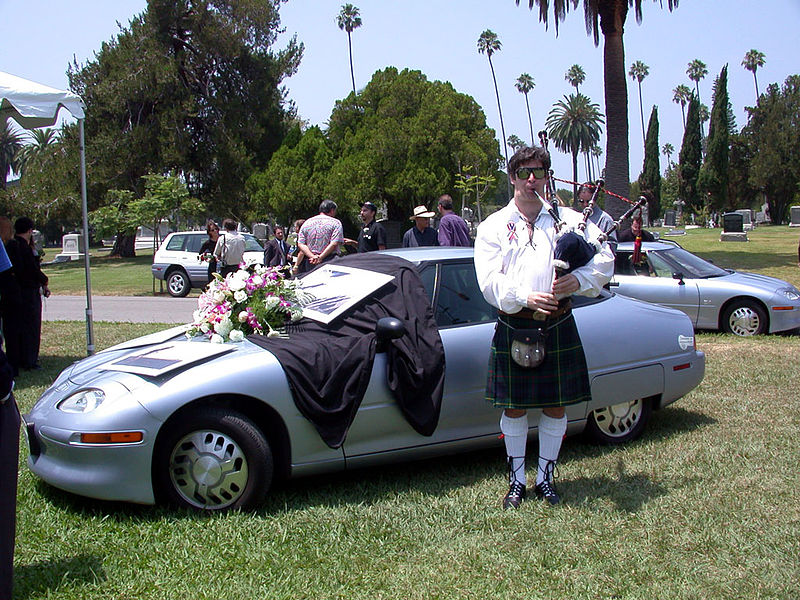
Earth Day 2022 Who Killed the Electric Car?
Earth Day 2022 (April 22, ’22) Who Killed the Electric Car?
The statistics and the forecasts for Global Warming and Climate Change are increasingly dire. The decision – and it is a decision – to do business as usual (buy big gas guzzlers) is becoming increasingly costly to the world. And the window to avoid the worst warming scenarios is closing. The CO2 and methane that we have been pumping into the atmosphere will persist for decades (centuries really) continuing to heat a warming world.
Monday, October 26, 2020
On the VERGE of Sustainability
VERGE 20 is on this week (starting October 26 2020). GreenBiz sponsor and coordinate this massive event. Anybody and any company that's got anything to do with sustainability is here. Well, not exactly here since it is virtual this year... But you get the idea.
Wednesday, April 22, 2020
Earth Day 2020, 50 years of Hind sight
![]() |
| 50th Earth Day. April 22 2020 |
Worldwide we are going on 3M positive COVID19 cases and nearing 200,000 deaths. The US, never to be outdone in anything that seems competitive, has 32% of the cases and more than 25% of the deaths. Deaths in New York and New Jersey just passed 15,000 and 5,000 respectively. New England deaths exceed all other countries. It is hard to imagine this given that the virus had to cross the Pacific (to the west coast) or travel to Europe and then cross the pond to New England. The US has only 4.2% of the world's population, yet 25% of the worlds deaths, and rising. How can that be?
COVID19 Positive Cases and Deaths
| As of April 22, 2020 | ||
| |||||||||||||||||||||||
COVID has had a big toll on health and live and a wicked toll on the world's economies. There some linings, and some of them silver, from this pandemic – currently and on the other side of it. Let’s think of a couple while we address what the other side of COVID might look like. First, if you think that we will ever get back to “normal”, you probably haven’t thought it through a lot.
But, in 2020, the earth has gotten a bit of a breather. Overshoot day will improve dramatically!
The economy will change. There will never be a "new normal". People have gotten a taste of teleworking. It's going to be hard to force people back into the offices that require an hour commute each way. Travel will take some time to come back, and business travel will never be the same. Stadium events will take some time to come back. Students have fully embraced online learning, and they will never fully go back.
Consumption of fossil fuels are down at least 30% during the closed economy, but consumption may only bounce back half when the economy slowly starts to churn back.
This might be the jump start that we all needed to step up a move toward sustainability. Assuming a 15% jump back, we would need to reduce our carbon footprint by 3% each and every year to have a 40% (overall) reduction by 2030, a 66% reduction by 2040, and near zero by 2050. Good news, we can easily move to 100% renewables by that time. (See Stanford Roadmap to 100% Renewable Energy by 2050 by country and also by major city.) And we can profitably move to 100% renewables if we include the health and death costs of fossil fuels.
Hind sight is 2020. Every year since the turn of century as been in the hottest 20 some years, with many years breaking all time records. In fact, many months have hit monthly record highs, especially since 2015 (an El Nino year). January 2020 was hottest on record, and the oceans have never been hotter. Remember that carbon dioxide (CO2) persists in the environment for about 100 years from the time we introduce it by burning fossil fuels. As CO2 zooms from about 320ppm a hundred years ago to 415ppm now, the green house gasses will result in atmospheric heating for a century!
Our linear economy was never "normal", for this reason, and many others no one should consider using the term "new normal" on the other side of the COVID recession. Hopefully, with 2020, we will have a new respect for science and scientists.
Let's leverage this tragedy of COVID to make a real difference in our trajectory of the future.
May every day be an Earth Day.
Tuesday, March 3, 2020
Amazon? Lungs of the world? Sinking feeling?
Here's a very readable discussion in Newsweek on how much oxygen comes from the Amazon: https://www.newsweek.com/how-much-oxygen-amazon-rain-forest-1456274
Much like Global Freezing, I don't know that I have ever heard/seen an actual scientist say this, but the Lungs of the World is still a pretty well circulated myth. Some times it says 20% of the oxygen in the world is produced by the Amazon Rain Forest. Actually, this is probably true, however the rainforest consumes most of the oxygen it produces. Plants (decomposition) consume it, animals in the forest, not so much so. Oxygen in the atmosphere is about 21% (20.95%, actually). And that's not going to change much, even if the Amazon was burned to the ground... Carbon Dioxide (CO2) on the other hand, that's not so pretty.
There's massive amounts of carbon stored in the trees and peat. That would all get moved from a stored state into the active environment (air and ocean). Same as chopping down 500 year-old native trees and burning them without replanting the same. Same as digging up coal that took 500m years to form and burning it (except that there's no way to return the coal in coal back to the sync from whence it came).
So, when the amazon is converted to grassland and ranching, the original carbon store is released into the atmosphere and the ability to store carbon (sync) is broken. Yes, grass is green, but it does a horrible job related to carbon sequestering compared to trees. Plus cows have a habit of belching and farting that releases a wicked amount of methane (32 to 64 times as potent a greenhouse gas as CO2).
Of course, there horrific impact on the environment. You could easily call this a crime against humanity and against the environment when native populations are killed and displaced and the rainforest with all it inhabitants of plants and animals are killed and destroyed forever.
National Geographic talks about the same issue, but follows on to discuss biodiversity: Why the Amazon doesn’t really produce 20% of the world’s oxygen: Of the many important reasons to worry about the thousands of fires raging in the world’s largest rainforest, oxygen supply is not one of them.
Friday, January 20, 2017
CO2 xGame Winners in Canada. Losers in USA?
What do you do with the CO2 is already into the atmosphere? This is the idea of capturing that 400 parts per million of CO2 out of the atmosphere after it's already, well, up in the error -- oops... I mean -- up in the air.
Here are the winners of the XGames competition on CO2. This $20M competition is to figure out ways to carbon capture and sequester (CCS). Unlike some industrial byproducts, CO2 can have a value (bottling, for example, to give you that happy fizz in your pop).
Here's some info on this big competition in Canada: CBC News discusses competition sponsored by Canada's Oil Sands Innovation Alliance and U.S. company NRG.
One of the 9 finalist, Ingenuity Labs, emulates photosynthesis to remove carbon dioxide from smoke stacks and such. They use a photosynthesis-like process to extract the carbon and make several industrial products out of the extract. True, this is a lot like planting a tree, but you have to wait 20 years for the wood, vs the immediate gratification of industrial products.
A very cool concept is by Carbicrete. Take out CO2 from an emissions source (say a smoke stack) and infuse it into concrete where the carbon is happily sequestered and it actually strengthens the concrete. (Note that concrete is a leading industrial source of CO2 emissions.)
While Canada is moving full forward with sustainability initiatives, the US is set to make a major shift in the other direction. Trump's Pruitt pick for the EPA might result in two departments of Energy. (Facts and miss-facts about Pruitt.)
The US has never had an energy policy. Carter was the last to propose one. Obama kinda had one, but without any legislative support, he was force-feeding it through the EPA. No matter who you are, that's not the right way. So the Clean Energy Plan, is about to get the can!...
That means the the job of the CCS might turn out to be far, far bigger in the future, as we try to burn up the last century or so of fossil fuels over the next hundred years.
We here at SustainZine consider "conservative" this way: The bestest, cheapest, cleanest gallon of gas is the one never extracted, never processed and never burned. The bestest, cheapest, cleanest tonne of coal is the one never extracted, never processed, and never burned (scrubbing or no scrubbing).
Saturday, July 2, 2016
Obama’s Climate Policy Is a Hot Mess - WSJ
Bjorn Lomborg may have been best know for his massive tomb of a book entitled The Skeptical Environmentalist. Lomborg (2007) in The Skeptical Environmentalist: Measuring the Real State of the World "may be the best source for reviewing the facts about quality of life, global
warming, and the optimal approaches for addressing the issues." (Hall, Taylor, Zapalski, & Hall, 2009, p. 5)
Apparently he has since gone off to consult for oil & gas interest. That's not all bad, but it does mean that he may not be unbiased as seemed to be the case during his Skeptical days.
Bjorn talks about, essentially, the bang for the buck ($US, in this case). The current Obama plan doesn't do much to move the global warming needle, especially given the costs. On the one hand, Obama will say that we have to start somewhere. In this case, and in several others, Bjorn simply says that this won't do much good. A smart guy like that should suggest better alternatives.
We, at SBPlan, argue that there are two monster places to start. AND neither requires the special help of government, really. Both are energy efficiency (EE) focused. Two EE business models that SBP especially likes are related to telecommuting using remote work centers and a pay-forward model
of promoting energy efficiency in all buildings – residential, commercial and
government. Since both of these initiatives save money, they offer a special win-win-win of sustainability (Employees, Employers and Environment, in this case).
If you read Bjorn's Skeptical Environmentalist, you will find that he totally believes that there is global warming and that man is a big (?major?) contributor. When you read this book you will agree, even before including the 10 record hot years since he published in 2007. What he does say, forcefully then, and now, is that we need to focus on the efforts that will result the move benefits. Huge government spending on reducing CO2, especially in developing countries, may have little, none, or even negative results.
Bjorn ended up in a big tiff over the 2007 book Skeptical Environmentalist. If it was an opinion piece then it would be okay to take the liberties that he did with interpreting the results; but as a scientific book, he had gone way to far. The Danish Committees on Scientific Dishonesty (DCSD) in Bjorn's home country, charged him with academic dishonesty in the book. This ruling went against Bjorn. On appeal the charge of scientific dishonesty was sent back for a do-over, where it stalled out.
Bjorg's follow Skeptical Environmentalist book(s) have titles that start with "Cool it!", concentrating on what to do that will likely have the most (short-term) benefits.
Bjorg, don't just complain in op-eds about Obama and the other 200 countries who signed the Paris greenhouse deal this April (agreed to in Dec 2015). The average person reading this op-ed would think that we all should do nothing and wait for Bill Gates Foundation to find a cure. Give people real suggestions for actions. Or, are you simply trying to sell your books and consulting?
References
(2009). Sustainability in education: Green in the facilities, but not in the
classrooms. Proceedings of the Society for Advancement of Management,
USA.
Cambridge University Press.
Thursday, November 26, 2015
Climate Leadership | Climate Leadership Plan | Alberta.ca
WOW.
On the eve of the humongous climate meetings in Paris next week (week after Thanksgiving in USA), Canada has stepped up to the plate on addressing climate changes.
Alberta is the home of Coal and Oil Sands: two of the great game changers in addressing pollution in general and Greenhouse Gas emissions (GHG).
There are several reports, but one is to simply charge a tax per metric tonne (yes, I know that's the colourful way to spell ton) of CO2. The price will move up from $15 to $30 per ton of CO2 by 2019.
In electric generation, the big game changer is to switch away from coal in general.
By 2030 in Alberta, "There will be no pollution from coal-fired
electricity generation." The focus will be on reduce electrical needs and switching to NatGas and Renewables.
But for Alberta, capping and steadily reversing the oil sands is a very big game changer.
With the oil glut keeping oil prices down below $50 per barrel for the foreseeable future, Alberta should be ramping down oil production anyway. (I think oil sands requires $70 to $80 to be profitable.).
The Carbon Taxes will be used: to offset increased living costs for poorer people, to assist with transition to renewables and other research.
For those still skeptical about Global Warming: Look at the pix of Athabasca Glacier over 100 years (well 98 really). Or look at any pictures over 40 years related to Glacier Bay in Alaska. Or, just a little south from Alberta, give a look at Glacier National Park in Montana (soon to be renamed Glacier-Less National Park).
'via Blog this'
Monday, September 28, 2015
Is 2015 The Year Soil Becomes Climate Change's Hottest Topic? | ThinkProgress
Global Soil Week was last week.
It slipped by without even a stain on the knees for most of us.
Give a look at this recount of the week's activities and the progress to address the issues we are generating for out soil, our top soil and the planet in general.
This is really ugly. One estimate is that we could deplete all top soil within 60 years. (Gotta question this one a little bit, but the concept is valid.)
And new studies show that the problem gets worse and worse as the temperatures of the planet rise.
Really ugly.
Smarter ag management and no-till farming is a great place to start on the critical, really CRITICAL, environmental issue.
'via Blog this'
Tuesday, April 7, 2015
Climate-change deniers are in retreat - The Washington Post
It will be nice to move past the non-debate about is there global warming, and move off into the real debate.
We are all living unsustainable lives with non-sustainable business models. What is our plan to move toward sustainability. Singly and collectively?
The argument that it doesn't do any good for us to do something if China and India continue consuming is sad and ironic.
For a century, we in the US with only 4.5% of the worlds population, have consumed about 1/4 of all the worlds resources consumed/used... Coal, Iron, Gas, etc.
We have produced about 1/4 of the worlds byproducts for a century (pollution and CO2).
We at this blog like to focus on those things that can be done within weeks, not decades. Energy Efficiency (EE) initiatives can pay for themselves in weeks, with a perpetuity of savings forever after. Telecommuting can result in a perpetuity of savings for ever (until you start a new job that requires a commuting).
We argue that nobody anywhere can reasonably believe that the price we pay at the pump of oil and at the meter for coal power is accurate and represents the true cost. Gas taxes continue to pay less and less of the US road maintenance, for example.
Economist generally settle on a carbon tax as a better solution than either subsidizing green energy/cars or a cap-and-trade mechanism. There will never be a better time to initiate a carbon tax then 2014 when oil prices are half and should be reasonably low for a year or more.
Or, we can continue to consume oil and gas like as if there is no tomorrow.
'via Blog this'
Saturday, January 17, 2015
NASA, NOAA Find 2014 Warmest Year in Modern Record | NASA
This is a good recap of the tie in to record warming with human activity.
It also give links the the raw data and the detailed methodology.
Anybody want to play with the raw, unadulterated data, you will find a LOT of it; and no matter which way you look at it trend line appears. And the trend line is very depressing.
BUT...
This blog is devoted to easy, affordable solutions that can be implemented right now, in a business friendly way. In fact, the first things that can be done, energy efficiency and telecommuting, offer huge savings to everyone concerned (and a nice boost in the direction of sustainability).
Why not start by picking the low-lying fruit now, and then address the heavy lifting as the next step.
Orrrr, we all can wait and wait until governments to get into the mix to help us all with the problems.:-(
We like the business now solution.
Saturday, July 12, 2014
Can jaw-dropping visuals on CO2. BIG smokes vs. BIG OIL | GreenBiz.com
This week in the news we wave the merger of BIG tobacco. Lorillard Brands if getting bought out by Reynolds; that is, the Newport brands are getting married to a camel. This will make a formidable competitor to Altria's Marlboro man. (I still love the genius of changing your name from Philip Morris USA to "Altria", it makes the company sound so Alteristic!:-)
So these are products, when used as directed will either kill you, or cause you to die younger... i.e., kill you.
The big difference between pollution into the atmosphere is that it is generally not the smoker (and their family it seems with 2nd hand-me-downs) that dies, it is everyone in the vicinity, down wind, and down stream.
The problems with burning fossil fuels, in addition to any other pollution that pollute in the traditional science, they create vast amounts more Carbon Dioxide (CO2) for the atmosphere than what the earth systems have become accustomed to dealing with. If 60% goes into the oceans, that causes increased acidification; what remains in the atmosphere, hangs around for about 100 years -- a deadly experiment that we are just beginning to see the effects of.
At least with tobacco, people enter into the deadly agreement under their own free will. The externalities of the well documented costs in life, income and economic product is largely offset by massive taxes. And it is really other countries that have fast increases in smoking while we in the USA have a rapidly dwindling market. (You could say that the market is dying off, if you wanted to add pun to death and sickness.) Although, electronic cigs are growing rapidly.
But, the BIG producers of fossil fuels, have it rather sweet. They tap a natural resource, like an oil reservoir, pump it dry, sell into energy markets and have no responsibility as to the costs of the use of their products. The jaw dropping visuals from the main article here, show the billions (with a B) of tonnes of CO2 created from/by the BIGgest oil producing companies.
The oil company pays some taxes to the country where it permanently depleted a natural resource. That seems only fair. The health costs of burning coal, direct pollution, are huge but generally not covered by the companies the produce and use it. Countries have taxes on transport fuel, to offset some of the costs of the vehicles. But nobody really pays the costs of the CO2 externalities. Or at least very little is done in that directly.
So the two, or three, questions for government: Should government shut down BIG tobacco? Or tax it more? Or allow it to move closer to a duopoly where they can keep raising prices to consumers and have them pay through the nose?
And the questions for government: Should government shut down BIG tobacco? Or tax it more? Or move to cap-n-trade? Or subsidize renewables?
The one that seems to work best, and economists all like best, is a direct tax. The tax increases need to gradually escalate, at least at the rate of inflation. This, of course is political suicide. So the tax is out, and no addressable solution is in.
This is a supply and demand world. In fossil fuels you have the BIG consumers, namely China and the USA, and the BIG producer companies. Both are to blame if what they sell/buy kills people. Right?
The sinful problems associated with the dirty companies go on.. and they keep getting BIGger.
'via Blog this'
Saturday, June 7, 2014
Our planet is at a point of crisis - Leonard Pitts - Newsday
Leonard Pitts is going to get some hate mail out of this article. But, sadly, its all true.
The only are that could be clarified a bit is the 97% of scientist agree. I think the agreement is that there is global warming, it drops way off to 80% or so of those scientists who believe that humans are primarily the cause.
The controversy is well discussed in Wikipedia's Global Warming Controversy.
The idea that taking action now is not even thinkable because it would destroy the economy, jobs, etc., etc., is not a sound one. That was the argument against doing anything related to auto emissions and mileage standards.
Fortunately coal is a good place for government intervention. The costs of coal in health and safety are massively higher than the $.04 per KWH from the past. Although we do a better job of cleaning coal, that doesn't help if we ship it all off to China and India where they burn it without the same scrubbers that we use. Also, there's the dirty little secret of coal: coal ash!. See our discussion here on: Pain in the ash!
As well, coal produces huge amounts of CO2 emissions: twice the pollution and emission of oil or nat gas.
Hey, here's an idea. We are flaring about 50% of the nat gas produced in the USA, why not pipe it to power plants and use the fuel for "free". Or, why not build small power plants near the frank wells and run the power lines to the grid... and have power for "free".
We, at SBP, like projects that save emissions and save money and save the environment. Things like Energy Efficiency (EE) and telecommuting... Projects that will save trillions of dollars every 3 years, en perpetuity. Projects that are -- I hate to say it -- "no brainer" decisions. Projects that require no government "help".
Sadly, these projects are hard areas to gain traction.
'via Blog this'
Sunday, May 25, 2014
Invest Yourself - Roaches, Never Just One
true. The currencies in the world are
all crap. The best may be Japan and they can’t keep the Yen low enough to be a competitive exporter so it is wreaking havoc on their economy…
Yuan or the Euro. We are the best house
in a slum-blighted neighborhood.
so long. Especially if all the effects are compounding, year over year. I
really do think that real assets, like land and gold, will slingshot into the
stratosphere sometime rather soon, say 1 to 3 years.
they did themselves. Go look at any of the databases, since recorded history,
on any of the measures you chose, and you will see that the global warming is
very real, and accelerating. It also coincides well with populations explosion and industrialization. And it is a compounding effect. Panicking certainly doesn't make
sense, but ignoring facts and data supporting global warming means the “hoax”
is on you.
(Real science and no crap, discussing the real facts and actual data about
Climate Change & Global Warming. It is very real by every measure that is
measurable.)
from live Wikipedia links on Sustainability. The Intro is by Elmer Hall and created the
dynamic links to carefully selected Wikipedia articles (pages). The pages in
this book represent the best, most current and most accurate single source of
information related to sustainability and climate change in the world.
'via Blog this'
Tuesday, March 11, 2014
Skeptical Science on a Skeptical Scientist: Patrick Moore on climate change
This will take you some time, so if you are looking for a couple quick sound-bites, skip this entire post, and absolutely, skip the videos.
Dr. Patrick Moore was recently pointed out to me as a qualified scientist and a active skeptic of Global Warming. Read about Moore on Wikipedia. He was an active founder of Greenpeace, but left the greenie organization when they become too radical. He thinks that Greenpeace has moved toward more social and anti-capitalistic agendas, not so much the protection of the environment that Greenpeace was founded on.
Now he is very skeptical of many things, especially the man-made contribution to global warming.
Moore has become a PR guy for some of the most criticized companies and industries by environmental groups. Working, and consulting for 'the enemy' is not at all a bad thing. Being in the economic engine side of energy production, metals, etc., can give people detailed insight into complete solutions to major issues. But this does not seem to be how Moore functions; his interviews and books seem to actually be an extension of his job as a PR guy. See the criticism at the end of his Wikipedia page.
(Wiki note: The Wikipedia entry seem mature, with about 700 edits, 21 over the last 30 days and the most recent edit today. No editorial complaints. Note that there are no articles outside links to this page, so Moore does not seem to be the indisputable expert he might lead us to believe.)
There are many interviews of Moore that seem rational and reasonable enough on the surface: Hannity Feb 2014, and Fox Business Network with Stuart Varney pushing his book, Confessions of a Greenpeace Dropout. But, don't watch these videos unless you are willing to go look that the scientific breakdown of what Moore has to say. Point by point, issue by issue.
This is a blog by John Mason (2012, Aug 25).
Unpicking a Gish-Gallop: former Greenpeace figure Patrick Moore on climate change:
Mason takes on the details of an interview in which Moore lavishes on facts, figures, assumptions and conclusions. And Mason breaks it down point-by-point with the best facts that exist today. Mason gives some of the best, and most factual, address of the issues associated with "Global Warming" and those who would say their "ain't no such thing". And he did it all without "sensationalist scare tactics".
When you are done, ask yourself: Who was the most shrill and panic? Who presented the facts with the most facts? Who's probabilities are most probable, give the facts?
This SustainZine blog does not devote much time to the debate over "Global Warming". Life's too short. There is global warming. Moore and Mason agree on this. Humans contribute to global warming. Moore says only a little; Mason (and the IPCC scientists) say humans contribute a lot to global warming. One of the last skeptical climate scientist Richard Muller, said that there was global warming and that humans are a major cause. Blogs here. Muller's research was funded by the Koch brothers.
This blog, however, focuses on Sustainability. Sustainability is good. Activities and business models that are non-sustainable are broken models. (Hah, you thought I was going to say "Bad".). A steady move toward 100% sustainability is not only a good plan, it is a sane plan. (Hah, you thought I was going to use the words "insane not to do so...".)
So let's get past this foolish debate and have real people and real companies start making real progress toward sustainability. If businesses and communities and individuals take long enough to get started on serious efforts to become sustainable, then governments will (start to) take charge.
What probably scares people more than Global Warming itself, actually, is that Governments far and wide will jump into the mix to "fix" things.
We especially like efforts that will save money, save time, save resources and reduce our impact on the environment. Usually, we "don't need no government" for that. (Actually that, not entirely true, but subject of another story.)
Responsible vs. Irresponsible.
You choose?
'via Blog this'
Tuesday, February 11, 2014
Pain in the Ash: Spill spews tons of coal ash into NC Dan River - CNN.com
Oh what a pain it is! ... A Pain in the Ash, so to speak.
One of the dirty little secrets of Coal is the ash!. The massive 2008 spill in TVA should have been a bit of a wakeup call. But this phone has been ringing for centuries. There's impurities in coal, including sulfur and heavy metals like lead and arsenic. See the EPA letter on the TVA spill. And coal power releases 100 times as much radiation into the environment as a nuclear power plant. High concentrations of uranium and thorium are released into the environment around a plant from the fly ash. See APA on this ash issue.
The other secrets are that about 10,000 people die in mines per year, most of them coal, and often in China. There's the impact to air and water that many estimates impact the health of hundreds of millions of people.
The bull in the China closet, of course, is -- well -- China. They burn more than half of the world's coal right now. PRC is still opening still are opening 1 to 2 coal power plants per week, unless that has changed. And they are much less worried about how much pollution escapes into the air and water. The summer Olympics were distinctive for the air pollution, and athletes trying to compete in smog.
This smog and pollution is "shared" with neighboring countries, and the world at large. Even the Americas on occasion get a beautiful sunset, complements of the Peoples Republic.
As well, coal is a huge greenhouse gas producer of CO2, something that is invisibly shared with the whole of the planet... and no one knows what the true costs and full consequences are. But we do know that CO2 as a greenhouse gas lasts about 100 years, so whatever the impacts are, they will be very, very, very long lasting.
Many economist suggest a tax on something that has distinctive, negative externalities. Maybe coal would be a candidate!? Taxes on cigarettes are an example. A gradual tax domestically seems logical. Maybe the rest of the world should tax all the coal that gets exported to China, as well. How about an import tax on those products that are primarily produced by dirty Chinese electricity?
The dirty little secrets of coal are getting out. It's been 2 centuries that coal has ruled the power infrastructure. It is time to seriously address this "open" secret.
If you are a stockholder or a customer of Duke, it is time to give the Duke a nudge, and elbow, or even a brisk kick in the 'ash!...
'via Blog this'
Tuesday, December 10, 2013
How China’s economy is choking on smog | Talking Numbers - Yahoo Finance
Imagine your favorite city closed down because of the weather, maybe a blizzard... Many of China's cities can have the same problem, but it is because of smog pollution.
This is a country that burns more coal than the rest of the world, combined.
Nice thing is that they share this pollution with their neighbors.
Plus the burning of coal is a gigantic producer of CO2 emissions.
At what point does this pollution start to curb the 7% economic growth that the company continues to experience? Certainly down from decades of more than 10% growth, but it is hard to grow with the traffic congestion and pollution slowing down ad periodically stopping the economy.
Things that are not sustainable, like rapid growth, have a way of producing their own remedy.
'via Blog this'
Sunday, August 25, 2013
Rising levels of acids in seas may endanger marine life, says study | Environment | The Guardian
Ouch!
This has been a growing concern. The rapid increases in the CO2 levels -- blasting past 400ppm as we speak -- that has several scary consequences.
First, there's the greenhouse gas (GHG) thing and the rising temperatures of the air and land.
Second, the excess CO2, at least some of it, is absorbed into the oceans. This increases the acidity of the oceans. Higher acid levels could wipe out shell fish, coral reefs and other things/animals that are critical for the health of the oceans (and of the planet).
Here's what the article and the scientists said:
Hans Poertner, professor of marine biology at the Alfred Wegener Institute in Germany, and co-author of a new study of the phenomenon, told the Guardian: "The current rate of change is likely to be more than 10 times faster than it has been in any of the evolutionary crises in the earth's history."Ouch!
Seawater is naturally slightly alkaline, but as oceans absorb CO2 from the air, their pH level falls gradually. Under the rapid escalation of greenhouse gas emissions, ocean acidification is gathering pace and many forms of marine life – especially species that build calcium-based shells – are under threat.
Tuesday, August 13, 2013
Holding back the oceans... The Cost of Energy... Compounding and getting worse.
Sunday, July 21, 2013
The Keeling Curve | How Much CO2 Can The Oceans Take Up?
So... of the 9.3 billion in CO2 emissions, the oceans have been absorbing about 26%. But, as in all things that reach saturation, this cannot be expected to continue.
We do know that CO2 will go into the air, since the atmosphere gets first go at fossil fuel emissions. So the Greenhouse gasses might start to rise much, much faster.
This certainly looks like a no-win.
'via Blog this'